spiritualy sanktum slav

January 2, 2026 3 min

The Core Philosophy: Participation, Not Submission

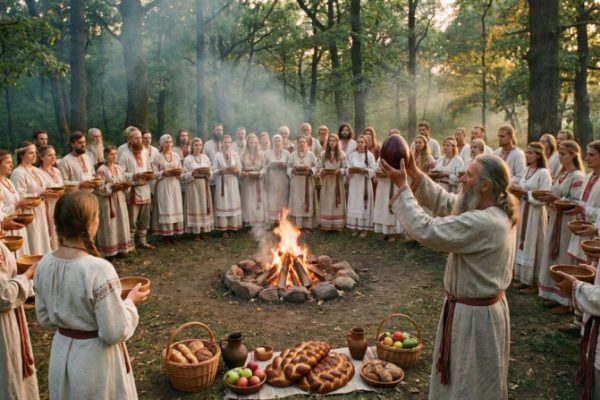
To truly grasp the essence of ancient Slavic spirituality, one must first dismantle modern assumptions about religion. The Slavic faith was fundamentally non-hierarchical, standing in stark contrast to the rigid…
January 2, 2026 4 min

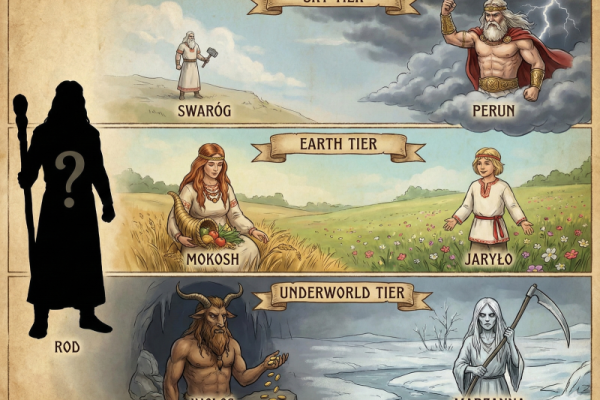
The Pantheon: Faces of the Infinite

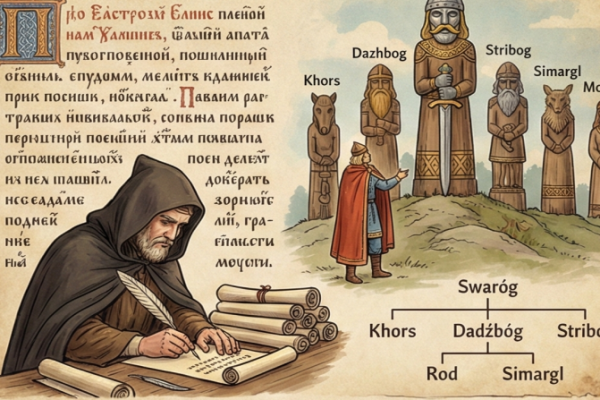
In the ancient Slavic worldview, the divine was not a distant, incomprehensible force, but a profound and multifaceted reflection of the cosmos itself. The gods were the physical and spiritual…

January 2, 2026 1 min

III. The Sacred Objects & Symbols

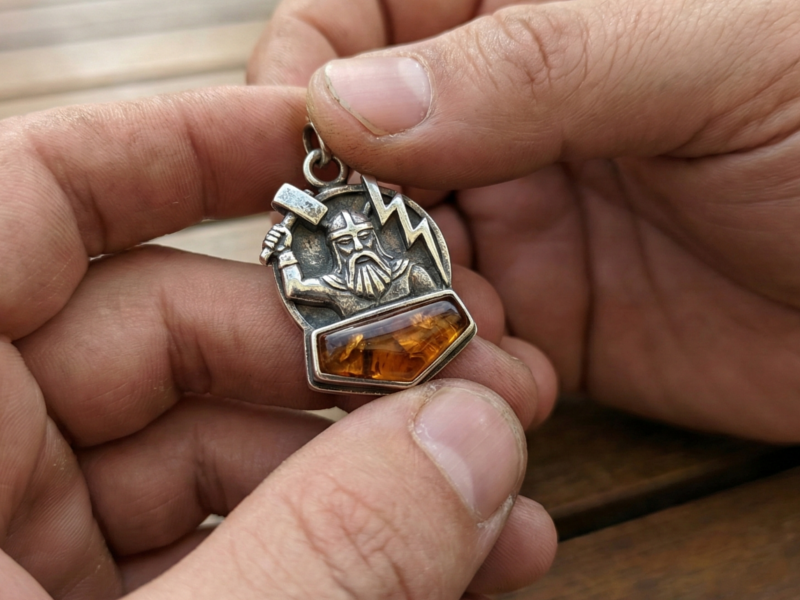
The gods did not exist only in myth—they were materially present. The Lunula (crescent moon pendant) was not jewelry—it was technology. Women wore it to align their menstrual cycles with…

January 2, 2026 3 min

The Seven Pillars of Ancient Slavic Deities

To truly understand the spiritual landscape of the ancient Slavs, one must view their pantheon not merely as a collection of quaint myths, but as a profound system of cultural…

January 2, 2026 3 min

The Cosmic Drama: Why the Slavic Gods Still Matter

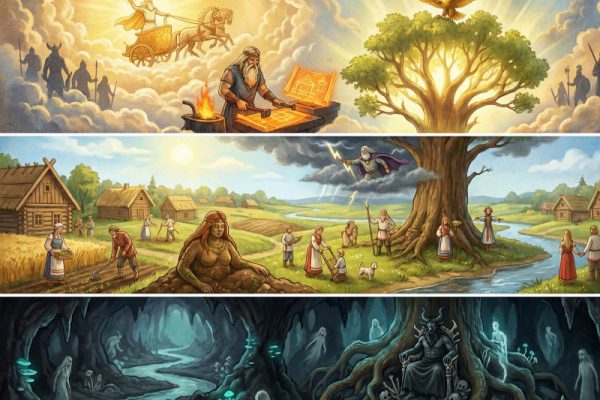
When Christianity swept across Eastern Europe, it did not encounter a scattered collection of primitive superstitions. It found a complete, deeply sophisticated cosmology—one that was internally consistent and empirically tested…

January 2, 2026 4 min

The Polytheistic Mind: Why Many Gods?

To the modern mind, raised in monotheistic cultures, a sprawling pantheon of gods often seems primitive or unnecessarily complicated. Why rely on many deities when one supreme God appears simpler…

January 2, 2026 4 min

4. Pantheon Structure: Hierarchy or Democracy? The Question: Is there a “king of gods” (like Zeus/Odin/Jupiter)? The Answer: COMPLICATED. Official Hierarchy (Vladimir’s Pantheon 980 AD): PERUN (listed first, most expensive…

January 2, 2026 2 min

7. Reading the Individual God Articles Structure of each article: Etymology & Name (linguistic roots, meaning, variants) II. Domains & Powers (what god controls, influences) III. Mythology & Stories (specific…