[expand]
White (biały, bely) was paradoxical—simultaneously the color of purity and death, beginning and ending, the blank canvas and the shroud.
Purity and Innocence:
White linen was the base fabric for embroidery, the pure background upon which protective symbols were worked. White represented potential, the unmarked state before life’s patterns were inscribed.
Babies were swaddled in white cloth—pure, clean, not yet marked by the world. Ritual garments were white linen, ensuring that the wearer approached the gods in a state of spiritual cleanliness.
Death and the Afterlife:
White was also the color of death—bones bleached by time, snow covering the landscape in winter’s sleep, the pale faces of the dead. Burial shrouds were white linen, wrapping the corpse in purity for its journey to Navia.
Widows wore white headcloths during the mourning period (before transitioning to black), marking their liminal state—neither fully in the world of the living nor yet released from attachment to the dead.
Sacred Neutrality:
White was the color of sacred spaces—ritual cloths, altar coverings, offering vessels. It was neutral, belonging to no specific deity, appropriate for all spiritual contexts. A white cloth could be used to honor Perun, Mokosh, Weles, or any god—the color imposed no preference.
Dye Sources:
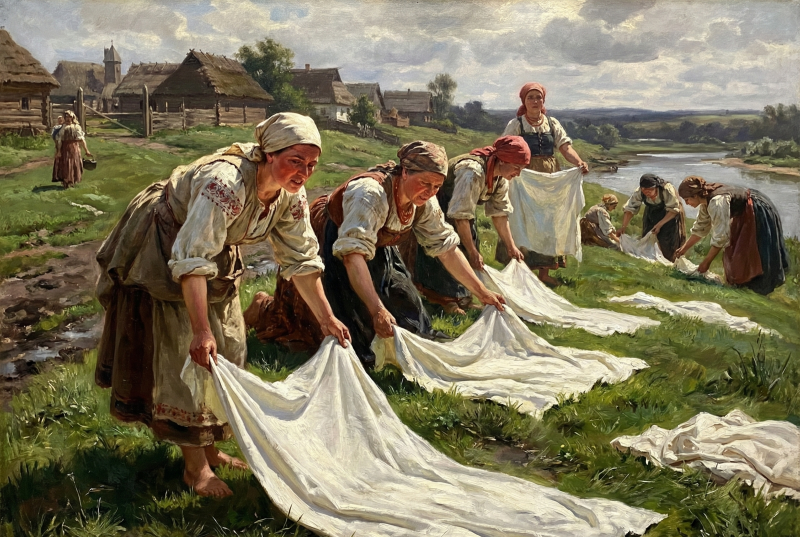
Natural linen and wool were off-white or cream. True white required bleaching—laying wet cloth in the sun for days, the light slowly breaking down pigments. This process itself had spiritual significance: the sun’s purifying light removing all color, leaving only pure white.
[/expand]