[expand]
Black (czarny, črny) was the color of earth, the underworld, the hidden depths where transformation occurred.
The Fertile Earth:
Black soil—humus rich in decomposed matter—was the most fertile. Black therefore represented agricultural abundance, the earth’s generative power. Mokosh, the Earth Mother, was often associated with black: black soil, black earth, the dark womb from which all life emerged.
Black embroidery on white linen (particularly in combination with red) created powerful protective patterns, invoking the earth’s stabilizing force.
The Underworld:
Black was also the color of Weles’s realm—the underworld, the domain of the dead and the cattle god. Black represented the hidden, the mysterious, the knowledge that came from descending into darkness.
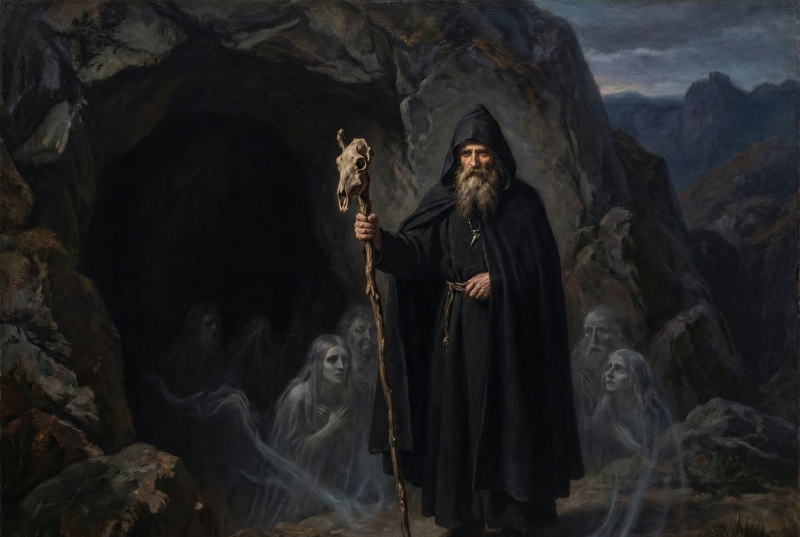
Shamans and priests working with underworld forces wore black, marking their willingness to traverse the dangerous boundary between life and death. Black was not evil but necessary darkness, the place of rest, transformation, and eventual rebirth.
Mourning:
Widows transitioned from white to black as mourning deepened. Black announced grief, loss, the shadow cast by death. But it was also protective—black absorbed all colors, creating a boundary that prevented the widow’s grief from contaminating others and prevented others’ vitality from disturbing her mourning process.
Dye Sources:
Black dye came from oak galls (tannic acid-rich growths on oak trees), walnut husks, or iron-rich mud. The process often involved multiple dippings, building up layers of darkness until true black was achieved.
[/expand]