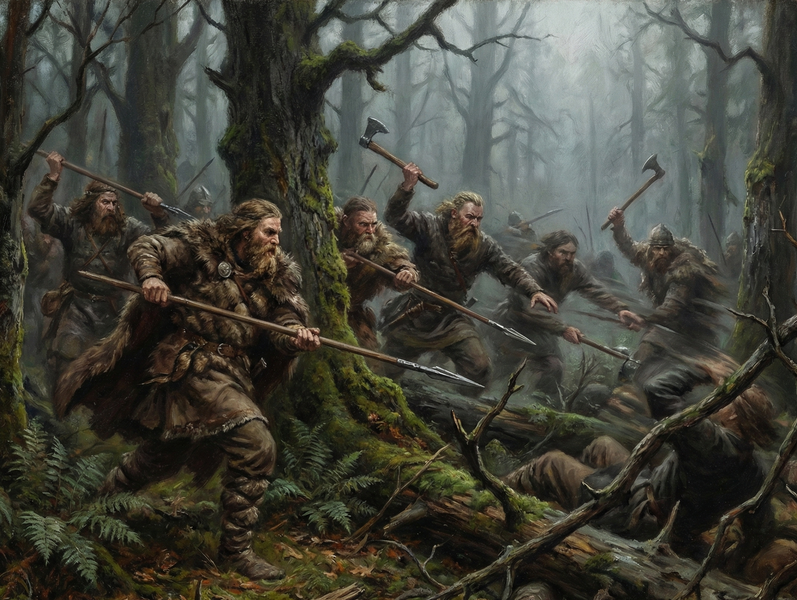
The Slavs were not cavalry charging across open plains. They were not heavy infantry in tight formations. They were forest fighters—ambushers, raiders, defenders of difficult terrain. Their tactics reflected geography: vast forests, countless rivers, swamps that swallowed armies. The Slavs used the land as weapon, turning their environment into ally and enemy territory into death trap.
- The Core Principles
Mobility Over Armor: Light equipment allowed rapid movement. Warriors could march all day, fight, retreat if necessary, and return tomorrow. Heavy armor meant exhaustion and capture.
Terrain Advantage: Never fight in the open unless necessary. Choose forests, swamps, river crossings—anywhere the enemy’s numbers and organization became disadvantages.
Defensive Strength: The grod (fortification) was ultimate tactical asset. Behind walls, outnumbered defenders held against superior forces. The attacker bled; the defender endured.
Strike and Withdraw: Raid, ambush, harass supply lines, then vanish into wilderness. Avoid pitched battle unless victory was certain. Patience defeated impatient enemies.
- The Forest Ambush
The Setup:
Scouts identified enemy routes. Warriors concealed themselves along both sides of narrow paths. The trap waited—silent, invisible, patient.
The Trigger:
When the enemy column entered the kill zone (preferably when stretched out, unable to form defensive lines), the signal was given—bird call, whistle, horn blast.
The Execution:
Arrows and javelins launched from concealment. Warriors charged from sides and rear, isolating and overwhelming sections of the enemy. Panic spread—enclosed by trees, unable to see attackers clearly, enemies trampled each other fleeing.
The Pursuit:
If the enemy broke, pursuit continued briefly—cutting down stragglers, capturing supplies. But Slavs didn’t chase deep into unfamiliar territory. They secured victory, took spoils, and withdrew.
III. River Defense
The Natural Barrier:
Rivers divided territories. Crossing was dangerous—warriors vulnerable in water, horses swimming couldn’t fight, equipment at risk of loss.
The Defense:
Slavic defenders positioned on the far bank launched arrows at those attempting to cross. Boats were hidden or destroyed. Fords were fortified. The enemy either found another crossing (lengthening their route, exposing flanks) or forced the crossing (taking heavy casualties).
The Counter-Crossing:
Once the enemy committed to crossing, Slavic forces counter-attacked—hitting disorganized troops emerging from water, exploiting their exhaustion and disarray.
- The Grod Defense
The Fortification:
Earthen ramparts topped with wooden palisades, surrounding a hilltop settlement. Gates created choke points. Towers provided elevated shooting positions.
The Siege Response:
Defenders rained arrows, stones, and boiling water on attackers climbing ramparts. Gatehouses became killing zones—narrow passages where numerical superiority meant nothing.
The Sortie:
When attackers exhausted themselves, defenders launched sorties—sudden attacks from gates, hitting siege equipment, killing engineers, spreading panic, then retreating behind walls before the enemy could respond.
The Endurance:
Grody stored food and water for months. Defenders outlasted attackers who ran out of supplies or faced winter conditions. Time was the defender’s ally.
- The Shield Wall
When pitched battle was unavoidable, Slavic infantry formed shield walls—overlapping shields creating continuous barrier, spears protruding through gaps.
The Formation:
Front rank held large shields, grounded at bottom. Second rank placed shields over first rank’s heads. Third rank thrust spears over the second. The wall became mobile fortress—slow but nearly impenetrable from the front.
The Weakness:
Flanks were vulnerable. Cavalry could ride around and attack from sides or rear. The wall had to anchor flanks on terrain features (river, forest edge, fortification) or risk encirclement.
- Raiding and Asymmetric Warfare
The Long Raid:
Small bands (10-50 warriors) penetrated enemy territory, moving at night, hiding during day. They targeted isolated farms, undefended villages, supply caravans—burning, looting, killing, then vanishing.
The Psychological Warfare:
Raids spread terror. Farmers fled fields. Trade routes closed. The enemy’s economy suffered. Eventually, they sued for peace or launched expensive punitive expeditions that often found nothing.
The Guerrilla Defense:
When invaded by superior force, Slavs practiced scorched earth—burning crops, poisoning wells, evacuating populations into forests and swamps. The enemy conquered empty land and starved trying to hold it.
VII. Naval Warfare
Slavic river raiders used monoxyla (dugout canoes) for lightning attacks:
- Fast, shallow-draft vessels navigating rivers inaccessible to larger ships
- Sudden raids on riverside settlements
- Rapid withdrawal before defenders organized response
These tactics terrified Byzantine chroniclers, who described Slavic raiders appearing “like demons from hell,” striking, and vanishing before counterattack could be mounted.
VIII. The Meaning: Pragmatic Violence
Slavic tactics reflected pragmatic calculation: Fight when advantageous. Avoid when not. Use terrain, patience, and mobility to offset enemy advantages in numbers, equipment, or training.
This wasn’t cowardice. It was strategic wisdom—winning through intelligence rather than brute force, surviving to fight again rather than dying gloriously in hopeless battles.