[expand]
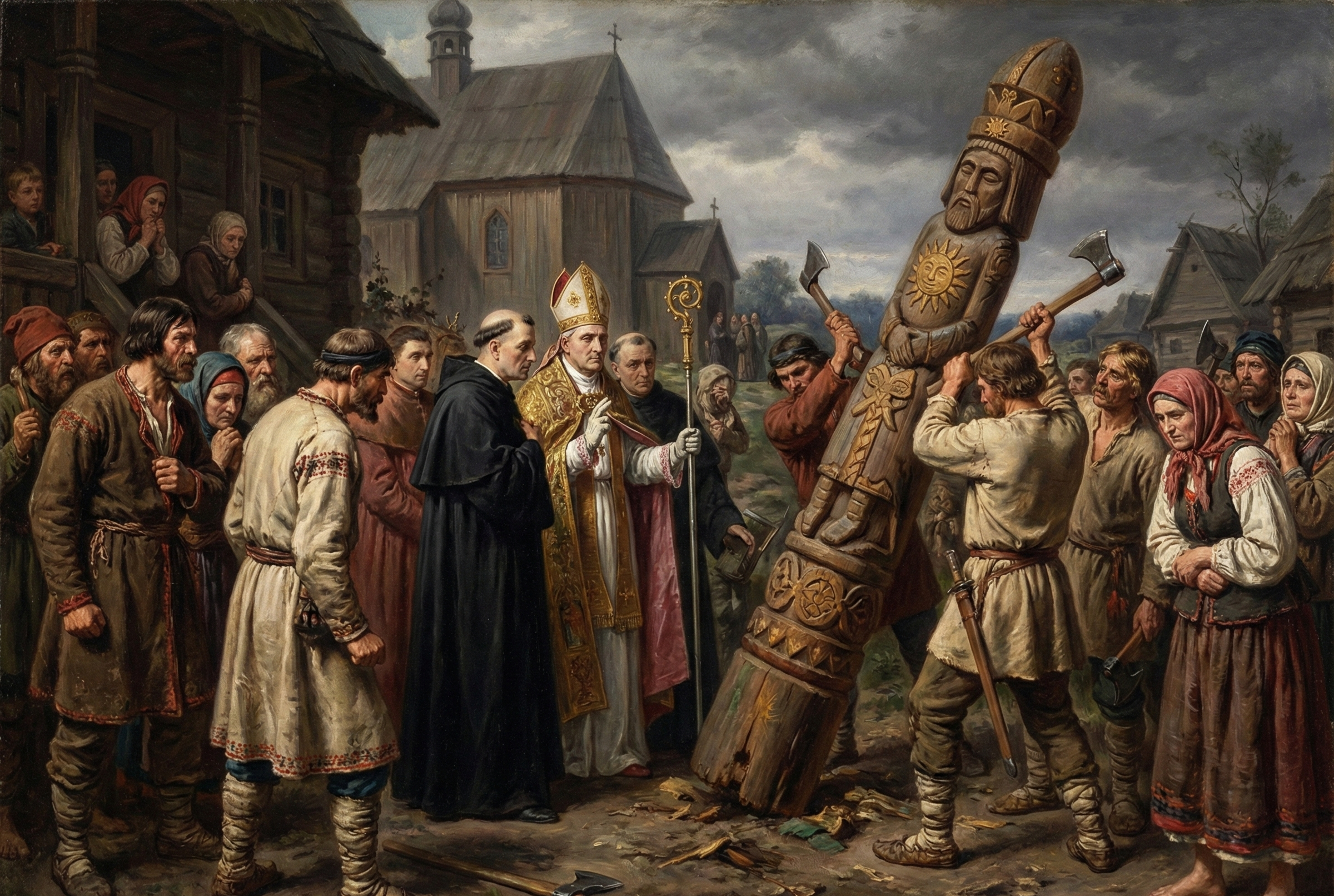
When Christianity arrived, the Kolovrat posed a problem for the Church. It was too obviously pagan, too tied to sun worship, too resistant to reinterpretation. The cross could be adopted (it had pre-Christian meanings in Slavic culture—a solar symbol itself, marking the four directions). But the spinning wheel? That was pure heathenism.
And so the Church attempted suppression. Kolovrats were chiseled off stone markers. Clergy preached against “sun idolatry.” Pagan symbols were declared satanic.
But the Kolovrat did not die. It retreated into the domestic sphere—into embroidery, into woodcarving, into pottery designs labeled as “folk art” rather than sacred symbols. Women continued to stitch eight-spoked wheels onto their children’s shirts, calling them “flowers” if questioned. Men continued to carve wheels into roof beams, claiming they were “decorative rosettes.”
The symbol survived because its meaning was encoded in muscle memory. A grandmother teaching her granddaughter to embroider did not need to explain the theology of solar rotation. She simply showed the pattern, and the pattern carried the knowledge forward, silent and unbroken.
[/expand]