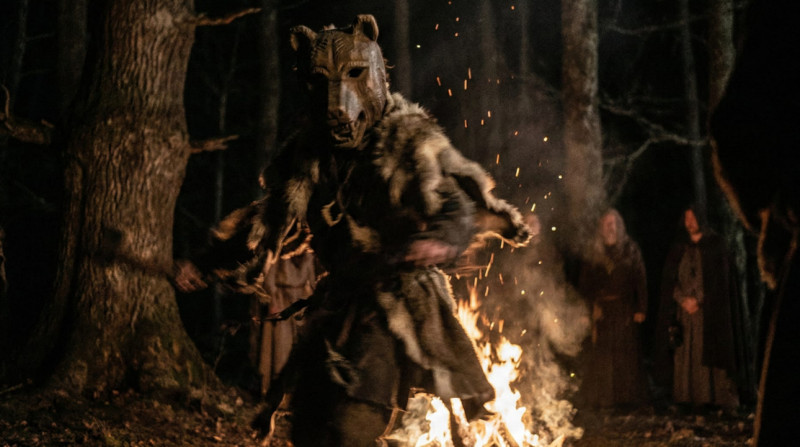
- The Healer Who Walks Sideways
The Slavic shaman was not called “shaman”—that’s a Tungusic word from Siberia. The Slavic equivalents were znakhar (knower), ved’mak (one who knows), wróżka (fortune-teller, but originally broader), or simply wise one (mądry, mudrets). But the function was identical across cultures: a healer who treated illness not just in the physical body but in the invisible dimensions where sickness truly originated.
Most illness, in the shamanic understanding, was spiritual before it became physical. A curse, a soul-loss, an angry spirit, an imbalance between the person and their environment—these manifested as physical symptoms, but treating the symptoms without addressing the spiritual cause was futile. The body would heal temporarily, then sicken again. Only treating the root—the spiritual dysfunction—produced lasting cure.
This required a healer who could perceive in multiple dimensions simultaneously. Someone who could see the sick person’s physical body and their energy body and their soul’s condition all at once. Someone who could journey into non-physical realms, negotiate with spirits, retrieve lost soul fragments, and return safely with healing knowledge or power.
This was dangerous work. Not all who attempted it survived. Not all who survived remained sane. The shaman walked between worlds, and the boundaries were sharp. One foot in Yav (material reality), one foot in Navia (spirit realm), balanced precariously over the threshold, operating in the place where most people couldn’t stand.
- The Making of a Shaman: Called, Not Chosen
You didn’t become a shaman by deciding to. You became one because you were called, and refusing the call was often worse than accepting it.
The Calling Sickness
The classic shamanic initiation began with illness. A young person—often in their teens or twenties—would fall sick with symptoms that didn’t respond to conventional treatment. Fever without obvious infection. Seizures without known cause. Visions that wouldn’t stop. Hearing voices when no one spoke.
The family would try everything: herbal medicine, prayer, offerings to household spirits. Nothing worked. The person grew worse, wasting away, sometimes approaching death.
Finally, an elder—often an established shaman—would diagnose the true problem: “The spirits are calling. This one must answer or die.”
The Training
If the afflicted accepted the calling, training began. This wasn’t formal schooling but apprenticeship combined with ordeal.
The apprentice learned:
- Which plants opened vision and which closed it
- How to enter trance states safely
- How to navigate the spirit realms without getting lost
- How to communicate with various spirit beings
- How to recognize different types of illness (physical, spiritual, mixed)
- How to protect oneself from malevolent entities
- How to return from the journey (this was critical—many beginners got lost)
The training lasted years. During this time, the apprentice often continued experiencing intense visions, spirit encounters, and physical symptoms. The initiation was ongoing trauma, deliberately induced and carefully guided, breaking down the ordinary consciousness and rebuilding it with capacity for non-ordinary perception.
The Ordeal
At some point—timing determined by spirits, not by human decision—the apprentice underwent the great ordeal. This varied, but common themes appeared across accounts:
- Being “taken apart” by spirits (symbolically dismembered, organs removed and replaced)
- Descending into the underworld and facing its inhabitants
- Ascending to the sky realms and receiving power from celestial beings
- Fasting for extended periods in isolation
- Enduring cold, heat, or other physical extremes
Those who survived the ordeal emerged transformed—no longer quite human but not fully spirit, occupying permanent liminal state. They could now heal because they had died and returned. They knew death from inside.
III. The Diagnostic Methods: Seeing What Others Cannot
The shaman’s first task was accurate diagnosis—determining what was actually wrong, which wasn’t always what appeared to be wrong.
The Soul-Looking (Patrzenie w Duszę)
The shaman would enter light trance and observe the sick person’s energy body. This appeared as light, color, or geometric patterns visible to the shaman but invisible to others.
A healthy person showed as bright, integrated, coherent energy. A sick person showed distortions:
- Dark spots or holes (soul loss, energy depletion)
- Murky color (spiritual pollution, curse)
- Fragments or disconnection (trauma, psychological splitting)
- Invasive presences (spirit possession, attachment)
- Weak boundaries (vulnerability to external influence)
The shaman described what they saw and correlated it with symptoms. “Yes, you have chest pain because there’s a dark mass here, and it feels like grief that was never released. When did you lose someone you loved?”
The Spirit Consultation
The shaman would contact their helping spirits—animal guides, ancestor spirits, or other non-physical allies—and ask what was wrong with the patient.
This might happen in full trance journey or in waking vision depending on the shaman’s particular practice. The spirits would provide information: the illness’s origin, what needed to be done, what the outcome would likely be.
Sometimes the spirits said: “This one cannot be healed. Death is approaching and is right.” The shaman’s job then shifted from cure to comfort, helping the person die well rather than fighting the inevitable.
The Divination Reading
Various divination methods revealed illness’s spiritual dimensions:
- Throwing bones or stones and reading the patterns
- Scrying in water or reflective surface
- Reading omens (bird flight, animal behavior, natural signs)
- Interpreting dreams (patient’s and shaman’s)
The reading revealed hidden information: Was this natural illness or magical attack? Was the patient being punished for breaking taboo? Had they offended a spirit? Was an ancestor trying to communicate?
- The Healing Methods: Multiple Approaches for Multiple Causes
Once diagnosis was complete, treatment began. The method depended on what was discovered.
Soul Retrieval (Odzyskanie Duszy)
When the diagnosis revealed soul loss—usually from trauma, severe fright, or profound grief—the shaman had to journey to recover the lost fragment.
The procedure:
- The shaman entered deep trance (often using rhythmic drumming, sometimes entheogenic plants)
- They traveled into the spirit realm, usually Navia (the underworld)
- They searched for the lost soul fragment, often aided by helping spirits
- They negotiated for its return (sometimes it had to be convinced to come back, sometimes it was imprisoned by malevolent entity)
- They captured it (often described as physically grabbing it) and returned to ordinary reality
- They blew the soul fragment back into the patient’s body (literally blowing into their chest or crown of head)
The patient often experienced immediate change—feeling “more present,” colors becoming brighter, emotional numbness lifting.
Extraction (Ekstrakcja)
When diagnosis revealed foreign spiritual intrusion—a curse object, an attached spirit, or concentrated negative energy—the shaman had to extract it.
The procedure:
- The shaman located the intrusion precisely (felt as density, cold, or wrongness in the energy body)
- They removed it, usually by sucking it out (the shaman literally placed mouth on affected area and sucked)
- They spat the extracted material into a bowl of water or into fire (never swallowed)
- They cleansed the wound left behind (energetic wound where the intrusion had been)
- They sealed the area to prevent recurrence
This was dangerous for the shaman—the extracted material was toxic. Proper disposal was critical; improper handling could sicken the shaman or pass the curse to someone else.
Power Restoration (Przywrócenie Mocy)
Some illness resulted from power loss—the person’s spiritual battery was depleted, leaving them vulnerable to everything. The shaman had to restore power.
The procedure:
- The shaman journeyed to power sources (sacred sites in spirit realm, celestial locations, or underworld power centers)
- They gathered power (experienced as light, energy, or specific substances)
- They returned and transferred it to the patient (blowing, touching, or visualization)
- They instructed the patient in maintaining power (what to avoid, what to do regularly)
Power restoration often required multiple sessions. Severe depletion couldn’t be fixed in one treatment.
Spirit Negotiation (Negocjacja z Duchami)
When illness resulted from offended spirit—household spirit, nature spirit, or ancestor—the shaman negotiated resolution.
The procedure:
- The shaman contacted the offended spirit
- They learned what wrong had been committed
- They negotiated terms of reconciliation (offering, behavior change, apology)
- They conveyed the terms to the patient
- They oversaw fulfillment of the agreement
- They verified the spirit’s acceptance
This could be simple (“Leave offering of bread and milk at the threshold daily for a week”) or complex (“You must relocate your outhouse—it’s over a spring, and the water spirit is furious”).
Psychopomp Work (Praca Psychopompa)
Sometimes the diagnosis revealed that the patient was being haunted or drained by a dead person who hadn’t properly transitioned to Navia. The shaman had to help the stuck soul move on.
The procedure:
- The shaman contacted the stuck spirit
- They learned why it remained (unfinished business, confusion, fear, attachment)
- They helped resolve the issue (conveying messages, performing forgotten rituals, providing guidance)
- They escorted the spirit to its proper realm (literally walking it through the death transition)
- They ensured the patient was released from the connection
This was delicate work. The stuck spirit might not want to leave. The living person might not want to let go. The shaman had to balance compassion with firmness.
- The Tools of the Trade: Sacred Objects and Substances
Shamans used various tools to facilitate their work.
The Drum (Bęben)
The drum was primary tool for entering trance. Its rhythmic beating—usually 4-7 beats per second—entrained brain waves into theta state, the frequency of deep trance and shamanic journey.
The drum wasn’t just percussion instrument but vehicle. The shaman “rode” the drum into the spirit realm, its sound carrying consciousness across the threshold.
The drum was often decorated with symbols, made from specific materials, and treated as alive. It had to be fed (offerings), rested (not played constantly), and respected (never used casually).
The Rattle (Grzechotka)
Secondary to the drum but valuable for specific work. The rattle’s sharp, cutting sound dispersed negative energy, called helping spirits, and marked transitions in ceremony.
Different rattles had different purposes. A rattle filled with seeds had different quality than one filled with stones or bones.
The Staff (Laska)
The shaman’s staff was walking stick, weapon, and cosmic axis miniature. It represented connection between realms and provided support during journey.
The staff was often carved with symbols, topped with animal skull or other power object, and was the shaman’s signature item—recognizable, personal, powerful.
The Costume (Strój)
Shamanic dress wasn’t costume in the theatrical sense but technology. Specific garments, symbols, and attachments facilitated spirit work.
Common elements:
- Feathers (connection to sky/bird spirits)
- Fur or hide (connection to animal spirits)
- Bones or antlers (connection to death/transformation)
- Bells or metal discs (sound to alert spirits)
- Mirrors (to see into other realms)
- Ribbons or fringe (represent rain, flow of energy)
The costume announced: “I am shaman. I stand between. Spirits recognize me.”
The Sacred Smoke (Święty Dym)
Various plants burned as incense for different purposes:
- Mugwort (vision-opening, protective)
- Wormwood (spirit-contacting, boundary-crossing)
- Juniper (cleansing, purifying)
- Cannabis (in some regions—trance-inducing, when legal/available)
The smoke carried prayers to spirits, cleansed spaces of negative energy, and helped the shaman enter altered states.
The Entheogenic Plants (Rośliny Enteogeniczne)
In some Slavic regions, shamans used psychoactive substances to facilitate deep trance:
- Fly agaric mushroom (Amanita muscaria—dangerous but used carefully)
- Hemp (Cannabis sativa—less dangerous, more common)
- Henbane (Hyoscyamus niger—very dangerous, used sparingly)
These weren’t recreational drugs but sacraments and tools. Used incorrectly, they killed. Used correctly, they opened doorways.
- The Cosmology: Navigating the Three Realms
Shamanic healing required traveling through the three-tiered cosmos.
Prawia (Upper World)
The realm above, associated with sky, light, and order. Prawia was home to:
- Sky gods (Perun, Dadźbóg, Swaróg)
- Celestial spirits
- Elevated ancestors
The shaman journeyed to Prawia for:
- Blessings from high powers
- Cosmic perspective on problems
- Restoration of divine order
The journey was usually up—climbing world tree, ascending mountain, flying with bird spirits.
Yav (Middle World)
The physical realm where humans lived. But Yav had spirit dimension invisible to ordinary consciousness. The shaman saw both simultaneously.
In Yav’s spirit dimension dwelled:
- Nature spirits (forest, water, field)
- Household spirits (domovoi, others)
- Attached entities (human-created or naturally occurring)
The shaman worked in Yav’s spirit dimension for:
- Negotiating with local spirits
- Clearing negative energies from places
- Repairing energetic damage to landscapes
Navia (Lower World)
The underworld, associated with earth, darkness, and transformation. Navia was home to:
- Chthonic deities (Weles, Mokosh in her underworld aspect)
- Ancestors
- Elemental powers
- Lost soul fragments
The shaman journeyed to Navia for:
- Soul retrieval
- Ancestor communication
- Death work
- Deep transformation
The journey was usually down—through cave, well, root of world tree, or hole in the earth.
VII. The Ethics: What Could and Couldn’t Be Done
Shamanic power was morally neutral—it could heal or harm depending on intent. Ethical shamans followed strict guidelines.
The Harm Principle
Genuine healing shamans avoided causing harm even to those who deserved it. Someone cursed by malevolent magic wasn’t cursed back but defended and cleansed. The attacking spirit was neutralized or sent away but not destroyed if avoidable.
Revenge magic existed—sorcerers would curse for pay or personal reasons—but this wasn’t shamanism. This was witchcraft’s dark side, and those who practiced it paid prices in their own health and afterlife destination.
The Consent Requirement
The shaman couldn’t force healing on unwilling patient. Free will was respected even when self-destructive. The shaman could offer, explain, recommend—but not compel.
Some illnesses were chosen unconsciously—the person received secondary gains from being sick. Forcing cure without addressing the underlying need caused relapse or symptom substitution.
The Compensation Balance
Shamanic healing required payment, but not necessarily money. The exchange created energetic balance. Someone healed for free remained in debt, spiritually speaking, and the imbalance could cause problems.
Payment could be:
- Food (traditional—the shaman had to eat)
- Labor (help with work, building, harvesting)
- Object of value (jewelry, tools, fabric)
- Service to community (teaching children, maintaining shrine)
- Money (after currency became common)
The amount had to represent genuine sacrifice. Too little meant no real exchange. The patient had to give something meaningful.
The Boundary Respect
The shaman couldn’t journey into realms without invitation or permission. Spirits had sovereignty in their domains. Barging in uninvited risked attack, capture, or getting lost.
Proper protocol required:
- Announcing intention before crossing threshold
- Requesting permission from guardian spirits
- Offering gifts to hosts
- Leaving when told to leave
- Thanking spirits afterward
VIII. The Dangers: What Could Go Wrong
Shamanic work was inherently risky. Even experienced practitioners faced hazards.
The Lost Journey
The shaman could become lost in the spirit realm, unable to find the way back. The body would remain in trance indefinitely—effectively comatose—while consciousness wandered.
Prevention required:
- Strong helping spirits who guided back
- Clear intention before journey
- Experience knowing the territory
- Anchor in ordinary reality (assistant watching the body, familiar location to return to)
If a shaman was lost, another shaman had to journey to find and retrieve them.
The Spirit Attack
Malevolent entities in spirit realm could attack journeying shaman. The fight was real despite being non-physical. Losing meant illness, madness, or death.
Protection required:
- Powerful helping spirits
- Defensive knowledge
- Quick retreat if overwhelmed
- Proper preparation before entering dangerous areas
The Possession
A shaman allowing spirit to enter (for communication or power) risked that spirit not wanting to leave. Partial possession was controlled and useful. Full possession was dangerous.
The possessed shaman lost agency, became puppet, might never fully recover. Exorcism was required, and not always successful.
The Energy Depletion
Healing work drained the shaman’s personal power. Too much work without adequate restoration led to illness, premature aging, or death.
Maintenance required:
- Regular power restoration journeys
- Physical rest between healing sessions
- Proper diet and sleep
- Connection to nature and sacred places
- Apprentices or assistants to share load
The Social Isolation
Shamans were respected but also feared, often living at village edge or alone. The power that made them useful also made them dangerous. Excessive contact with spirits made them strange, difficult to be around for ordinary people.
Many shamans struggled with loneliness despite being needed by community.
- The Christian Persecution: Shaman to Witch
When Christianity arrived, shamanic healing was reinterpreted as witchcraft and devil worship.
The shaman’s tools became evidence of evil:
- The drum was destroyed
- The costume was burned
- The sacred smoke was “summoning demons”
- The healing was “black magic”
Some shamans converted, hiding their practice beneath Christian forms:
- Journeying “to speak with saints” instead of spirits
- Using prayer instead of chanting
- Replacing pagan symbols with crosses
Others were executed, imprisoned, or driven into hiding. The tradition went underground, transmitted secretly, knowledge lost or fragmented.
- The Survival: What Remains
Despite persecution, fragments of shamanic healing survived.
The Folk Healers
In rural areas, folk healers (babushki, wise women, cunning men) maintained some shamanic techniques while avoiding overt spirit work:
- Energy reading (calling it “intuition” not “seeing”)
- Curse removal (framed as prayer not extraction)
- Soul healing (never called that but essentially the same)
The Modern Revival
Late 20th and early 21st centuries saw shamanic revival, though authenticity varies:
- Some lineages genuinely survived and are now being taught openly
- Some practitioners reconstructed from ethnographic accounts and experimentation
- Some borrowed from Siberian or circumpolar shamanism and adapted to Slavic context
- Some is new age invention with minimal connection to historical practice
Discernment is required. Real shamanic work produces results. Theater produces experiences.
The Teaching
Shamanic healing addressed what conventional medicine ignored: the spiritual dimension of illness. When trauma, curse, soul-loss, or spirit intrusion caused sickness, physical treatment alone failed.
The shaman healed by traveling to the actual source of the problem—not the manifested symptom but the original wound in invisible realms. This required courage, training, power, and relationship with spirit allies.
It was dangerous work. Many failed. Some died. Others went mad. But those who succeeded brought back healing that nothing else could provide.
The need for this work hasn’t disappeared. Humans still experience soul-loss, spiritual intrusion, and energetic imbalance. Modern medicine treats the body brilliantly but often ignores the soul.
The shaman’s knowledge waits—in fragments, in memories, in the spirit realm itself where those who died still teach those who learn to journey.
The drum still beats in the between-place.
The spirits still wait for those who know how to call.
The healing still works for those brave enough to seek it.
The threshold remains.
Who will cross?