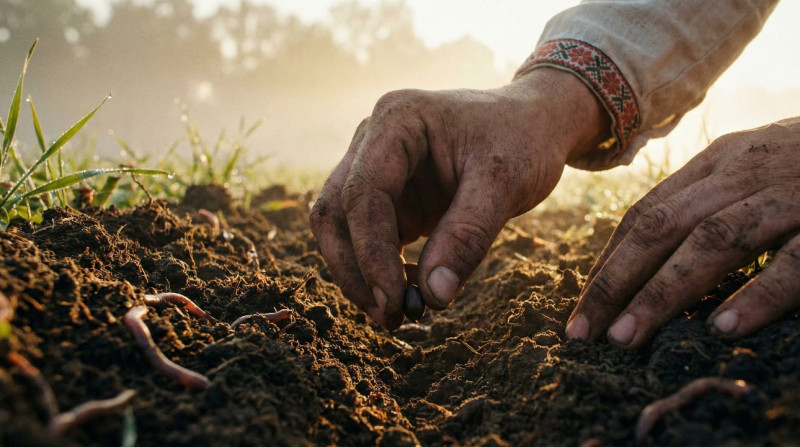
Agriculture was not merely practical labor. It was theology enacted—the continuous negotiation between humans, gods, and earth that determined whether the community lived or starved. Every stage of the farming cycle required ritual intervention: blessing the seeds, protecting the growing crops, celebrating the harvest, storing the grain. The festivals marking these stages were not optional celebrations but mandatory procedures, essential maintenance of the cosmic machinery that sustained existence.
The Slavs understood that human effort alone achieved nothing. You could plow perfectly, sow expertly, and tend diligently—but without divine cooperation, the crops failed. Drought, hail, pests, blight—these were not random misfortunes but consequences of broken relationships with gods and spirits. The agricultural festivals were contract renewals, moments when the community reaffirmed its commitment to reciprocity, offering first fruits, labor, and honor in exchange for continued fertility.
I. The First Plowing: Awakening the Earth
The agricultural year began not with planting but with plowing—breaking the winter-hardened soil, preparing it to receive seeds. This was sacred work, performed with prayer and offering.
The Timing:
The first plowing occurred after the Spring Equinox (late March or early April), when the earth had thawed sufficiently but before planting season. The exact day was determined by divination—reading signs (bird flight, weather patterns, dreams) to discern when Mokosh (the Earth Mother) was ready.
The Ritual:
The farmer—usually the head of household or the community’s acknowledged best plowman—prepared the sacred plow. This plow was:
- Blessed with water from a sacred spring
- Anointed with oil or animal fat
- Sometimes decorated with ribbons or carved symbols
Before the plow touched soil, the farmer walked the field’s perimeter, marking the boundary and speaking a protective charm:
“Mokosh, open your womb. Receive the seed we plant. As the plow cuts, may your flesh yield abundance.”
The First Furrow:
The first furrow—the initial cut into the earth—was especially sacred. At the furrow’s start, the farmer buried offerings:
- A handful of grain (last year’s harvest returned to the source)
- Bread and salt (sustenance and preservation)
- A coin or small piece of silver (payment for the earth’s cooperation)
The plow was then drawn—by oxen, horses, or human strength—creating the first line across the field. This furrow was not merely agricultural; it was ontological. It established the relationship between human labor and divine fertility for the entire growing season.
The Communal Feast:
After the first plowing, the community gathered for a modest feast—bread, porridge, beer. The meal acknowledged that the cycle had begun, that humans had fulfilled their initial obligation, and that now they waited for Mokosh’s response.
II. Sowing: Planting the Future
Once the fields were plowed, sowing began—scattering seeds that would (gods willing) multiply into the harvest.
The Blessing of Seeds:
Before any seed touched soil, the community’s grain stores were consecrated. A priest, elder, or household head:
- Sprinkled seeds with water from a sacred spring
- Passed them through smoke from the hearth fire (Swarożyc’s blessing)
- Spoke a charm invoking fertility
The Sowing Ritual:
The act of sowing was performed with reverence. The sower—often women, as closer to Mokosh’s mysteries—carried seeds in an apron or basket blessed by fire. As they scattered seeds, they spoke or sang:
“As one seed becomes a hundred, may our work multiply. As grain feeds us, may we feed the earth. As the wheel turns, may abundance return.”
The Prohibition:
Certain behaviors were forbidden during sowing season:
- No cursing or angry words (negative energy harmed seeds)
- No menstruating women sowing (their blood magic was too powerful, might overwhelm delicate sprouts)
- No stepping on freshly sown areas (crushing the potential)
The Watching:
After sowing, the community waited—watching for the first green shoots, the sign that Mokosh had accepted the offering and begun her work. If seeds failed to sprout, divination determined the cause: insufficient offerings, offended spirits, or divine punishment for communal sins.
III. The Growing Season: Protection and Maintenance
Between sowing and harvest, the crops required constant vigilance—not merely against physical threats (pests, weather) but spiritual ones (curses, demons, malevolent magic).
The Protective Rituals:
Throughout spring and summer, farmers performed regular protections:
- Boundary Walks: Walking the field’s perimeter weekly, renewing protective barriers
- Herb Burning: Smoking fields with wormwood, juniper, or other apotropaic plants
- Charms: Wooden stakes carved with protective symbols (kolovrats, thunder marks) placed at field corners
The “Beard of Veles” Designation:
Early in the growing season, the farmer designated the last sheaf that would remain standing at harvest—the “Beard of Veles” (Weles’s portion). This sheaf was marked mentally or with a small ribbon, acknowledging that not all grain belonged to humans. Weles, as god of fertility’s hidden mechanisms, claimed his share.
The Anti-Hail Rituals:
Hail was one of agriculture’s greatest terrors—destroying months of work in minutes. To prevent hail, communities performed Płanetnik rituals:
- Offerings to the Płanetnicy (cloud-dragging spirits) who controlled weather
- Shooting arrows or throwing stones at threatening clouds (driving away demons)
- Ringing church bells (post-Christianization) to “break up” hail clouds
The Drought Prayers:
If rain failed to come, the community organized processions to sacred sites:
- Climbing mountains or hills to be closer to Perun
- Offering bulls or rams in dramatic sacrifices
- Young women dancing in circles while older women poured water on them (sympathetic magic—imitating rain to summon rain)
IV. The Harvest: The Sacred Accounting
When grain ripened—turning golden, ready to cut—the harvest began. This was the year’s culmination, the moment when the community discovered whether their offerings, labor, and prayers had been sufficient.
The First Sheaf:
The first grain cut was sacred. It was:
- Never eaten by humans
- Burned as offering to gods (smoke carrying gratitude upward)
- Hung in the home as protective talisman
The Harvest Feast (Dożynki):
As the final fields were cut, the community celebrated Dożynki—the harvest festival. This was not mere joy but relief and gratitude. They had survived. The grain was gathered. Winter would not mean starvation.
The Ritual:
The community gathered in the largest harvested field. The final sheaf—the Beard of Veles—remained standing at the field’s center. Around it, tables were set with the first foods made from new grain:
- Fresh bread (still warm, baked that morning)
- Porridge (kasha made from new grain)
- Beer (brewed quickly from fresh barley)
The Toast:
The eldest male (or the landowner) raised a cup and spoke:
“Mokosh, you opened your womb. Weles, you allowed abundance. Perun, you sent rain. Swarożyc, you warmed the soil. We give thanks. We return to you the first fruits. May the cycle continue.”
The cup was poured onto the ground—libation for the gods. Then the community ate, drank, sang, and danced—releasing the tension of months spent worrying whether the harvest would suffice.
The Wreath (Wieniec Dożynkowy):
Young women wove a harvest wreath from the final sheaf’s grain, decorating it with flowers, ribbons, and herbs. This wreath was presented to the landowner or community leader, who hung it in a place of honor—above the threshold, in the barn, or at a household shrine. The wreath remained until the next harvest, a protective charm and a reminder of abundance.
V. Threshing and Storage: Securing the Future
After harvest, grain had to be threshed (separated from chaff) and stored (protected until consumed).
The Threshing Ritual:
Threshing was communal labor—the entire village gathering to beat grain, separating edible kernels from waste. Before beginning, offerings were made to the Domovoy (house spirit who would guard the stored grain) and to Mokosh (thanking her for the yield).
The Storage Blessing:
When grain was placed in storage—barns, silos, underground pits—protective measures were enacted:
- Herbs: Wormwood and garlic hung to repel pests and demons
- Symbols: Carved into storage structure walls (solar symbols, protective glyphs)
- Charms: Spoken over the grain, ensuring preservation
The Prohibition:
Once stored, grain was rationed carefully. To waste grain was not merely economically foolish but spiritually dangerous—insulting the gods who had provided it and inviting future scarcity.
VI. The Autumn Gratitude: Closing the Cycle
After all grain was stored and animals slaughtered for winter, the community held a final autumn feast—often coinciding with the Autumn Equinox (late September).
The Accounting:
This feast was sober assessment:
- Was the harvest sufficient for winter?
- Had enough been offered to gods and spirits?
- Were relationships with divine forces in good standing?
If the harvest was poor, the community sought reasons—divinatory sessions determined which spirit had been offended, which ritual had been neglected, which person had committed a sin that angered the gods.
The Dziady Connection:
The autumn feast often merged with Dziady (Ancestors’ Feast). The dead were invited to share the harvest they had helped produce—through their labor when alive, through their blessings from Navia. The boundary between living and dead thinned, and the family reunited across death.
VII. Winter Preparation: The Dormancy
After the autumn equinox, the land entered dormancy. Fields lay fallow, snow covered the earth, and Mokosh slept. But this was not inactivity—it was regeneration.
The Midwinter Offerings:
During the Winter Solstice (Koliada), offerings were made not for immediate harvest but for next year’s cycle:
- Grain from the current harvest offered to ensure future fertility
- Prayers for Mokosh’s restful sleep
- Requests that the earth wake again in spring
The Seed Storage:
Seeds for next year’s planting were stored separately, treated with extra care. These were sacred objects—the future incarnate. To lose or damage seed grain was catastrophe, meaning no crop next year.
VIII. The Meaning: Farming as Ritual
The agricultural festivals were not celebrations of human achievement. They were acknowledgments of dependence. Humans provided labor, but gods provided the conditions—sun, rain, fertile soil, protection from disaster.
Every festival reinforced this reality:
- First Plowing: We begin, but success depends on you (gods)
- Sowing: We plant, but growth is your gift
- Growing Season: We protect, but you must sustain
- Harvest: We gather, but this abundance came from your cooperation
- Storage: We preserve, but help us survive until spring
The festivals were not optional. A community that neglected them risked not merely divine displeasure but material collapse. Without proper offerings, the cosmic machinery broke down. Crops failed. Famine followed. The cycle ended.
IX. The Christian Overlay
Christianity absorbed agricultural festivals but stripped much pagan theology:
- First Plowing: Became blessing of fields by priests (no more Mokosh invocations)
- Harvest Festival: Became Thanksgiving or Harvest Home (gratitude directed to Christian God)
- Dziady: Became All Souls’ Day (ancestors still honored, but within Christian framework)
The actions persisted—processions, blessings, feasts—but the understanding shifted. Where pagans negotiated, Christians petitioned. Where pagans offered reciprocally, Christians prayed humbly.
Yet in rural areas, the old ways lingered. Peasants blessed fields, poured libations, left the “Beard of Veles,” and maintained the ancient contracts—now calling them “traditions” rather than theology, but performing them identically.
X. The Lesson: Dependence and Partnership
The agricultural festivals taught:
You are not self-sufficient. Your labor matters, but it is not enough. You need the earth, the rain, the sun, the spirits, the gods. Pride invites disaster.
Reciprocity is mandatory. What you take, you must return. The first fruits belong to the gods. The final sheaf belongs to Weles. Withholding these offerings breaks the contract.
The cycle continues only if maintained. The wheel turns, but humans must turn it—through ritual, offering, and acknowledgment. Neglect does not merely offend; it breaks the machinery, and when the machinery breaks, people die.
The Slavs farmed not as conquerors of nature but as participants in cosmic drama—actors fulfilling roles written long ago, maintaining patterns that predated humanity and would outlast it. To farm was to enact theology. To harvest was to receive grace. And to offer the first fruits was to ensure that next year, the gift would return.