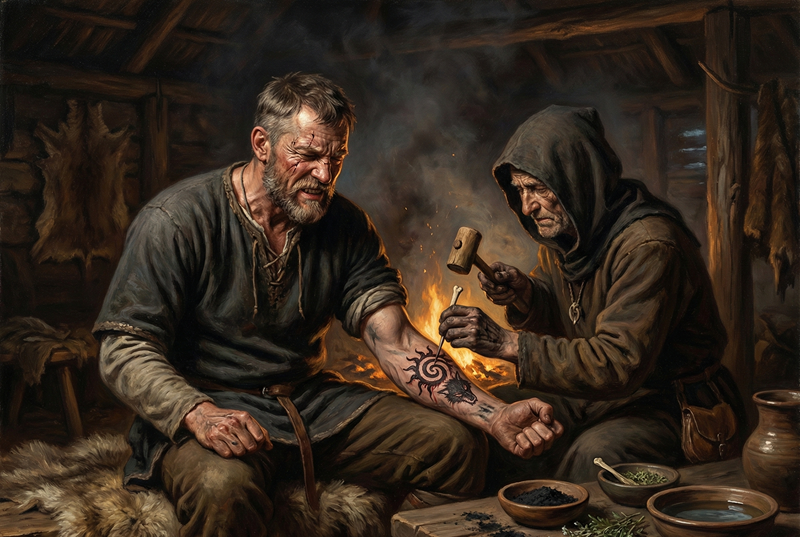
The Permanent Mark
[expand]Cloth could be torn. Wood could burn. Stone could crack. But the skin—the living boundary between self and world—was the most intimate and enduring surface for sacred inscription. A tattoo was not decoration but transformation, the conversion of flesh into text, the body into a walking shrine. Once marked, you carried the symbol until death, and some believed the marks traveled with the soul into the afterlife, identifying you to the ancestors and gods.
Tattooing among the ancient Slavs was not universal—sources are fragmentary, archaeological evidence limited, much knowledge lost to Christian suppression. But what remains suggests a practice both sacred and selective, reserved for those who had earned the right to permanent marking through initiation, deed, or spiritual calling.
The tattoo was not chosen lightly. It was a covenant written in pain, sealed in blood, binding the bearer to the symbol’s power and the symbol’s obligations. You did not wear a god’s mark unless you were willing to serve that god. You did not carry a warrior’s symbol unless you were prepared to fight. The skin remembered, and so did the spirits[/expand]