[expand]
Red (czerwony, črveny) was the most powerful color in the Slavic palette—the color of blood, fire, sunrise, and vitality.
Blood and Life Force:
Red was blood made visible, the life force externalizing itself. Blood flowing in the body sustained life; blood spilled in sacrifice connected worlds; blood shared (through oath-brotherhood) created bonds stronger than kinship. Red garments, red thread, red ornaments all carried this vital energy.
A child dressed in red was shielded from illness and the evil eye—the color’s vitality repelled death and malevolence. A bride wore red embroidery on her wedding garments, ensuring fertility and protection during the vulnerable transition into marriage. A warrior might tie a red cloth around his arm before battle, invoking the color’s fierce energy.
Fire and the Sun:
Red was also fire—Swarożyc’s element, Perun’s thunderbolt made visible. Fire purified, destroyed, and transformed. Red invoked these qualities: a red thread burned in a ritual fire carried the prayer to the gods, red cloth used to wrap ritual tools sanctified them.
The rising and setting sun both appeared red, marking the transitions between night and day, darkness and light. Red was therefore a threshold color, appropriate for liminal moments—birth, marriage, death.
Apotropaic Power:
Red repelled demons and the evil eye. The mechanisms were multiple: some believed demons feared fire and blood, seeing red as threat; others thought the color’s intensity confused the evil eye, scattering its malevolent focus.
Red thread was the most common protective tool—tied around a baby’s wrist, woven into a bride’s hair, sewn into the hem of clothing. A single strand of red wool, properly blessed, could ward off an entire household’s worth of spiritual threats.
Dye Sources:
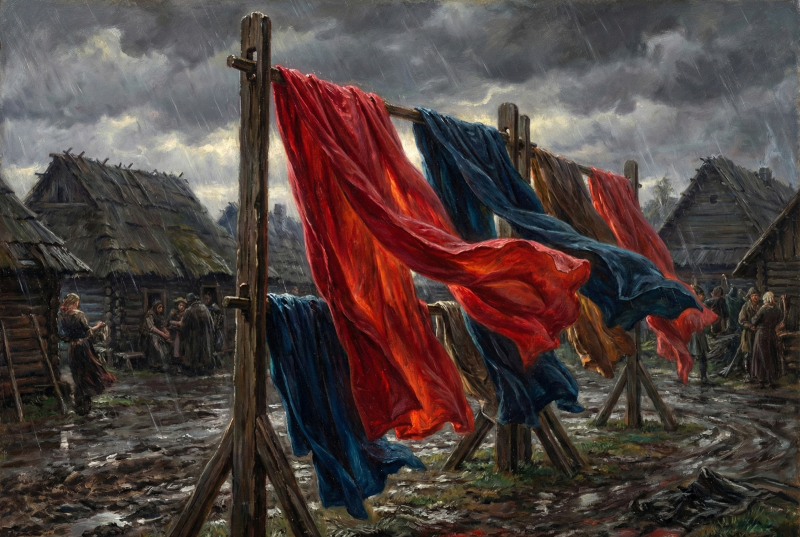
Red dyes came from madder root (Rubia tinctorum), cochineal insects, or pokeweed berries. The dyeing process itself was ritualized—certain prayers spoken while stirring the dye pot, certain days considered auspicious for dyeing, certain prohibitions observed (never dye during menstruation, as the blood magic might contaminate the color).
[/expand]