Color as Force
[expand]
Color was not passive decoration to the ancient Slavs. It was active force, energy made visible, a carrier of specific spiritual properties that could heal, protect, curse, or bless. To wear red was not simply to choose a garment; it was to arm oneself with the power of blood and fire. To paint a door blue was to invoke the protective qualities of water and sky. Color spoke a language older than words, communicating directly with the spiritual realm.
This was not superstition but sophisticated chromatic theology—a system of correspondences linking hues to elements, deities, seasons, life stages, and metaphysical states. The Slavic understanding of color was phenomenological: they observed what colors did (red blood flowing from wounds, black earth yielding crops, white snow covering death) and encoded these observations into a coherent symbolic system.
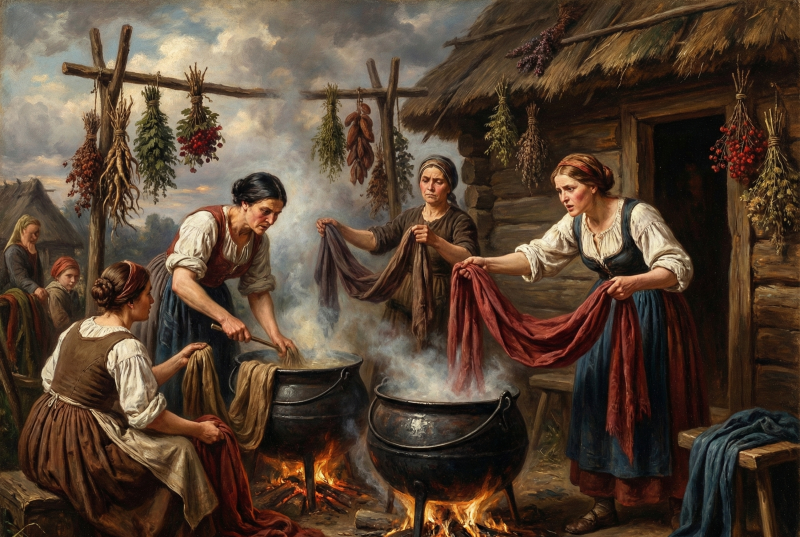
The dyes used to create colors were themselves sacred—extracted from plants, minerals, and insects through labor-intensive processes that required knowledge, patience, and often ritual preparation. The creation of color was alchemical work, transforming raw matter into chromatic essence.
[/expand]