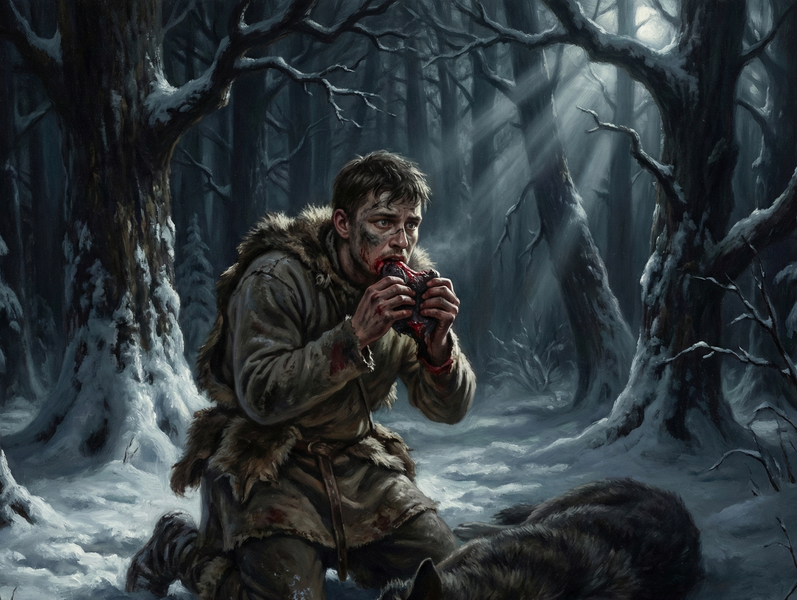
- The Sacred Violence
The Slavic warrior was not merely soldier—someone who fought when ordered, for pay or under threat. The true warrior belonged to cult, a structured system of belief, ritual, and practice that transformed violence from chaotic brutality into sacred art.
The cult was not religion in sense of worshipping specific deity (though gods were invoked). It was totality of warrior life: how you trained, how you fought, how you died, how you were remembered. The cult defined identity—you were not man who sometimes fought; you were warrior who sometimes did other things.
This was voluntary association. Free men could choose to join druzhina (warrior retinue), undergo initiation, accept the code, and live the life. Those who joined gained status, purpose, and brotherhood. But they also accepted obligations that civilians did not bear: to fight when called, to die if necessary, to uphold honor even at personal cost.
The warrior cult was contract with death—acknowledgment that your life would likely be short and violent, but it would be meaningful. You would not die as anonymous peasant struck by disease or accident. You would die as warrior, and your name would be remembered.
- The Initiation: Becoming Warrior
One did not simply pick up weapon and declare oneself warrior. The transformation required ritual process that marked psychological, social, and spiritual transition.
The Candidate (Młodzieniec)
The boy who sought warrior path was typically 14-16 years old—old enough for physical strength and coordination, young enough for brain plasticity allowing combat skill acquisition.
Requirements:
Free birth—slaves and serfs could not join.
Physical fitness—demonstrated through tests of strength, endurance, agility.
Family permission—father (or uncle if father dead) consented to son’s entry into dangerous profession.
Sponsorship—existing warrior vouched for candidate, agreeing to train and support him.
The Testing Period
Before formal initiation, the candidate underwent probation (typically one year):
Physical training: Running with weighted pack, swimming in armor, climbing, wrestling, weapons drill from dawn to dusk. The goal was building base conditioning and testing commitment—many candidates quit during this phase.
Mental training: Memorizing battle songs, learning tactical principles, studying weapons and armor construction, understanding command structure.
Service: Acting as squire/attendant to sponsor—maintaining his weapons, tending his horse, managing his equipment. This taught discipline and created personal bond.
Testing: At period’s end, series of challenges: solo night in forest (proving courage), multi-day fast (proving endurance), simulated combat against experienced warriors (proving skill development).
The Initiation Ritual
If candidate passed testing, the initiation occurred during major festival (often summer solstice or harvest celebration):
The Isolation: Candidate spent night alone in sacred grove or at boundary marker, meditating on what he was leaving behind (childhood, safety, civilian life) and what he was accepting (danger, brotherhood, death).
The Oath: At dawn, before assembled warriors and community witnesses, candidate swore:
“I abandon the boy I was.
I accept the warrior I become.
I will stand with my brothers in battle.
I will honor my enemies in death.
I will serve my prince with loyalty.
I will meet death with courage.
So I swear, on iron and blood.”
The oath was sworn while holding weapon (sword, axe, or spear)—the iron witnessed and bound the promise.
The Marking: Physical mark indicated transformation:
Hair cutting: Boy’s long hair cut short (military practical cut) or shaped into warrior style (sometimes shaved sides, top knot remaining).
Scarification: In some traditions, ritual scarring on arm, shoulder, or chest—permanent mark of warrior status.
Tattoo: Blue-black tattoos using ash or plant dyes, depicting protective symbols, animal totems, or geometric patterns.
Gift of Weapons: Sponsor presented initiate with first weapon—not finest weapon (that was earned through deeds) but functional, honest blade. Accepting it acknowledged responsibility: this tool will kill, and you are now person who kills.
The Feast: Community celebrated the new warrior with feast. But the initiate himself fasted—his first meal as warrior would be after first battle, symbolic recognition that warrior earns his bread through combat.
The Name: Sometimes initiate received warrior name, distinct from birth name. The name might reference physical trait (Vysoky—tall, Bystrý—swift), weapon preference (Toporowicz—son of axe), or aspirational quality (Neustraszymy—fearless).
III. The Brotherhood: Bonds Beyond Blood
The warrior cult created artificial kinship that sometimes superseded biological family.
Druzhina (Дружина):
The term derives from root drug (friend, companion). The druzhina was fellowship of friends united by shared purpose and mutual dependence.
Structure:
Prince (Książę): Warband leader—not necessarily royal blood, but recognized military commander who could attract and maintain followers.
Boyars (Bojarzy): Senior warriors, advisors, often wealthy enough to maintain their own smaller retinues.
Regular warriors: The bulk of druzhina—professional fighters, unmarried or with families left in protected settlements.
Initiates: Recent additions, still proving themselves.
The druzhina lived communally:
Shared quarters: Warriors slept in common hall (not private chambers), fostering constant interaction.
Common meals: Eating together from common pot reinforced equality and prevented status displays through food.
Joint training: Daily weapons practice, tactical drills, athletic competitions—building synchronized capability.
Collective discipline: Punishment for infractions (cowardice, theft, oath-breaking) was administered by entire druzhina, not by prince alone.
The Brotherhood Obligations:
Mutual defense: If brother was attacked, all responded—regardless of personal risk or whether the brother was in the right.
Resource sharing: No warrior hoarded wealth while brothers lacked necessities. Plunder was distributed according to contribution, but none were left destitute.
Revenge duty: If brother was killed, surviving warriors pursued vengeance—not as personal choice but as sacred obligation.
Succession support: When warrior died, druzhina ensured his widow and children received share of collective resources and protection.
These obligations created bonds that:
Made warriors fight harder—fleeing meant abandoning brothers.
Prevented tyranny—prince who abused warriors faced collective resistance.
Distributed risk—no individual warrior bore burden alone.
Created legacy—warrior’s sacrifice benefited his brothers and their families.
- The Code: Honor Above Life
The warrior cult operated according to unwritten but universally understood code defining acceptable and unacceptable behavior.
Courage (Męstwo):
Face danger without fleeing. Fear was acceptable—cowardice was not. The distinction: fear while advancing is human; retreat without authorization is shameful.
Manifestations:
Standing ground when outnumbered.
Volunteering for dangerous missions.
Challenging superior opponent to prove worth.
Dying in place rather than running.
Violation: Flight from battle, abandoning wounded brother, hiding during combat—these meant expulsion, exile, or execution.
Loyalty (Wierność):
Serve your prince faithfully. Execute orders even when costly. Keep oaths even when inconvenient.
But loyalty had limits. If prince:
Broke his own oath to warriors (failed to provide promised payment, betrayed them to enemy)
Acted dishonorably (massacred prisoners after promising safe passage, attacked under flag of truce)
Became tyrant (abused his own people, confiscated property without cause)
Then warriors could withdraw loyalty—abandon him, elect new prince, or even kill him in extreme cases.
Honor (Cześć):
Maintain reputation through consistent honorable action. Reputation was capital—it determined who would ally with you, who would hire you, who would marry their daughter to you.
Honor requirements:
Keep promises.
Pay debts.
Treat worthy opponents with respect.
Admit when wrong.
Accept responsibility for failures.
Dishonor:
Lying about combat achievements.
Blaming others for your mistakes.
Mistreating defeated enemies who surrendered honorably.
Breaking oath.
Dishonor once established was nearly impossible to erase. The warrior whose word could not be trusted was useless to druzhina—no one would fight beside him.
Mercy to Worthy Foe (Litość dla Godnego Wroga):
Enemy who fought bravely, surrendered when defeat was certain, and treated his own captives well deserved honorable treatment:
Clean death (beheading, not torture).
Ransom possibility (if valuable).
Decent burial (not left for scavengers).
Respect for his valor (acknowledging he fought well).
But enemy who:
Tortured captives
Violated surrender terms
Used cowardly tactics (poison, attacking wounded, killing under truce)
Deserved no mercy—could be killed slowly, publicly, as warning to others.
Acceptance of Fate (Pogodzenie się z Losem):
Death was inevitable; how you died determined your legacy.
Good death:
Facing enemy (not running).
Weapon in hand (not unarmed).
Brothers present (witnessed and remembered).
Conscious and aware (not from disease or accident).
Bad death:
Old age in bed (warrior should die in battle).
Disease (wasting away is undignified).
Accident (no glory in falling off horse during peacetime).
Betrayal (killed by supposed friend).
The warrior who achieved good death was celebrated—songs composed, name remembered, family honored. The warrior who died badly was forgotten—mercy of silence.
- The Animal Totems: Borrowing Savage Power
Warriors adopted animal identities, claiming characteristics of fierce creatures.
The Wolf (Wilk):
Most common totem. Wolves represented:
Pack cohesion: Fighting together, not as individuals.
Persistence: Pursuing prey until exhaustion.
Calculated aggression: Not reckless but strategic.
Warrior practices:
Wolf-skin cloaks or helms.
Wolf howls before battle (intimidation).
Pack tactics (coordinated attacks, surrounding prey).
Ulfhednar (“wolf-coats”)—warriors who specifically identified as wolves, sometimes claiming ability to transform into wolves during battle fury.
The Bear (Niedźwiedź):
Bears represented:
Raw strength: Overwhelming physical power.
Fearlessness: Bears don’t flee; they attack.
Protective fury: Mother bear defending cubs.
Warrior practices:
Bear-skin armor (actual hide, providing protection).
Fighting style emphasizing crushing blows over finesse.
Battle rage deliberately cultivated (see berserker section).
Berserkers (“bear-shirts”)—warriors who fought in trance state, feeling no pain, exhibiting superhuman strength.
The Boar (Dzik):
Boars represented:
Indomitability: Wounded boar charges forward, not retreat.
Ferocity: Tusks inflict terrible wounds.
Stubborn endurance: Boar fights until death, never surrenders.
Warrior practices:
Boar-head helms or standards.
Frontal assault tactics (no flanking, no retreat).
Refusing quarter (never surrender, never ask mercy).
The Raven (Kruk):
Ravens (associated with battlefield dead) represented:
Intelligence: Ravens are clever, adaptable.
Prophecy: Raven flight patterns predicted battle outcomes.
Death familiarity: Ravens feed on corpses, comfortable with mortality.
Warrior practices:
Raven feathers in helm or cloak.
Divination before battle (observing raven behavior).
Calm acceptance of death (ravens teach that death is natural, not tragic).
- The Battle Rage: Wściekłość
Some warriors cultivated combat trance—altered state of consciousness where pain was unfelt, fear was absent, and only killing mattered.
The Berserker Phenomenon:
The term “berserker” comes from Norse (ber-serkr, bear-shirt), but Slavic equivalents existed. These warriors:
Entered trance through:
Hyperventilation (rapid deep breathing).
Rhythmic movement (dancing, chanting).
Self-inflicted pain (biting shields, cutting themselves).
Possibly psychoactive substances (mushrooms, herbs—debated by scholars).
In trance state:
Pain tolerance increased dramatically (wounds ignored).
Strength seemed superhuman (adrenaline, removed inhibitions).
Rational thought diminished (fought instinctively, not tactically).
Distinction between friend and foe blurred (dangerous to allies).
After battle:
Extreme exhaustion (collapse, sometimes days of weakness).
Injury awareness (wounds ignored during trance now debilitating).
Psychological aftermath (some warriors suffered permanent mental damage).
Social Ambivalence:
Berserkers were useful—their fury broke shield walls, terrified enemies, achieved impossible feats.
But they were also dangerous—might attack allies during trance, required careful handling, and often struggled with civilian life.
Communities tolerated berserkers while they functioned but exiled those who became uncontrollable.
VII. The Death Culture: Honoring the Fallen
Warrior cult’s ultimate expression was how it treated death.
The Battlefield Funeral:
When warrior fell in battle:
Immediate: If possible, retrieve body during or immediately after fighting. Leaving brother’s corpse to rot was shameful.
Preparation: Clean the body, arrange weapons on or beside it, close eyes, straighten limbs.
Burial or cremation: Depends on regional custom. Cremation was more common (releases spirit quickly, prevents desecration). Burial in warrior mound with weapons and armor preserved body but required secure territory.
The Song: Brothers sang death song—not mourning but celebration of warrior’s deeds, ensuring his name lived in memory.
“He stood when others fled.
He struck when others hesitated.
He died as a warrior should—
With weapon in hand,
Brothers beside him,
Enemy before him.
His name is [NAME].
His name endures.”
The Feast: After battle, surviving warriors held funeral feast—drinking to fallen brother’s memory, recounting his exploits, promising to care for his family.
The Inheritance: Dead warrior’s personal weapon (if recovered) often went to his battle-brother (closest friend in druzhina) rather than blood relative, recognizing that battlefield bond was sacred.
The Long-Term Memory:
Annual remembrance: On death anniversary (or communal day for all fallen), warriors gathered, drank mead, spoke fallen brothers’ names.
Songs preserved: Exceptional warriors became subjects of epic songs transmitted orally across generations.
Weapon preservation: Some weapons of legendary warriors were kept as relics—not used in battle but displayed, inspiring current generation.
VIII. The Decline: From Cult to Profession
As Slavic states centralized and adopted Western military models, warrior cults transformed or dissolved.
Christianization:
Church opposed warrior cults as pagan practice:
Animal totems were demonic.
Berserker rages were possession.
Oath-swearing on weapons was blasphemy.
Brotherhood bonds challenged family primacy.
Christian warriors swore oaths on relics, invoked saints (especially St. Michael, St. George), and subordinated warrior identity to Christian identity.
Professionalization:
Standing armies replaced retinues. Soldiers received pay, not honor. Combat became job, not calling.
Bureaucratization:
Written law codes replaced honor codes. Courts judged warriors’ actions by legal statutes, not peer evaluation.
Economic Change:
Land became wealth’s basis, not plunder. Warriors became landlords, collecting rent rather than raiding.
By 15th century:
Traditional warrior cults existed only in frontier regions (Cossacks maintained aspects) and cultural memory.
- The Legacy: What Warrior Cults Taught
Brotherhood Transcends Biology:
Chosen family can be stronger than birth family when forged through shared danger and mutual dependence.
Honor Is Performance:
Reputation is earned through consistent action, not claimed through birth or declaration.
Death Can Be Meaningful:
How you die matters—not as moral judgment but as final statement of who you were.
Ritual Structures Violence:
Without cult’s disciplining structure, violence becomes nihilistic. The code, initiation, and brotherhood channeled aggression toward purpose rather than chaos.
Sacred and Profane Coexist:
The warrior killed (profane act) but did so within sacred framework (ritual, code, purpose). Violence was not denied but transformed.
- The Modern Echo
Warrior cult patterns persist:
Military special forces: Intense initiation, brotherhood bonds, honor codes, totemic identities (Rangers, SEALs).
Martial arts schools: Ritual, hierarchy, code, master-student bonds, competition as controlled violence.
Sports teams: Shared sacrifice, mutual defense, honoring retired members, ceremonial aspects.
The underlying psychology: Humans need belonging, purpose, meaning in facing danger. The warrior cult provided all three.
When modern society fails to channel these needs, they manifest as:
Gang membership (brotherhood through violence).
Extremism (sacred purpose through destruction).
Toxic online communities (honor through dominance displays).
The lesson: The warrior cult was not primitive barbarism but sophisticated system for managing violence, creating cohesion, and giving dangerous life meaning.
Abolishing the cult without replacing its functions creates vacuum filled by worse alternatives.
The axe hangs on the wall.
The oath echoes in memory.
The brothers are dust.
But the code endures, waiting for the generation that needs it, the moment when civilization’s thin veneer cracks and the question returns:
When violence is necessary, how shall we structure it?
When death is certain, how shall we face it?
When brotherhood is tested, how shall we prove it?
The warrior cult answers.
And the answer is written in iron and blood.