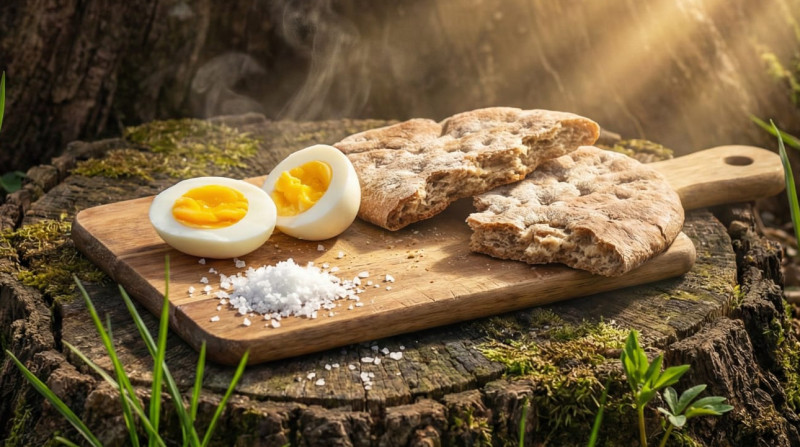
In the ancient Slavic worldview, humans did not approach their gods as trembling beggars pleading for mercy. Instead, they negotiated. The relationship between the mortal and the divine was fundamentally transactional, yet never merely mercenary—it was built on a profound, binding covenant of reciprocity. The gods provided rain, fertility, protection, and cosmic order. In return, humans provided honor, sustenance, and direct acknowledgment. Both sides were expected to hold up their end of the bargain; if one failed, the entire contract dissolved.
This sacred reciprocity was enacted through physical offerings given to gods, nature spirits, and the ancestors residing in Navia. These offerings were never viewed as symbolic gestures or shallow bribes. They were literal payments, spiritual fuel, and a direct method of communication. The gods needed these offerings just as humans needed bread. To offer was not an optional act of piety; it was a strict obligation. The ancient Slavs lived in a universe where every gift created a debt, and every debt demanded repayment. Nothing was free, everything circulated, and the great wheel of existence turned entirely on this exchange.
The Principle of Do ut Des
The ancient Latin phrase do ut des—”I give so that you may give”—captures the Slavic spiritual economy perfectly. Offerings were acts of exchange, not submission. When a farmer planted his seeds in the spring, he would leave the first handful at the edge of the field as an offering to Mokosh, the Earth Mother. This was not charity; it was an investment. The grain fed the earth spirit, who in turn ensured the rest of the field would thrive. If the farmer arrogantly withheld the offering, Mokosh would rightfully withhold the harvest. The terms were brutally clear.
Similarly, when a traveler needed safe passage across a treacherous river, they did not just pray for safety—they paid the water spirits by tossing coins or bread into the currents. The gods were not superior beings demanding blind tribute; they were essential partners in the harsh business of survival.
The Binding Power of the Irretrievable
While food and grain were the daily currency of the gods, critical moments required precious offerings. Items of high value—such as silver coins, intricately crafted jewelry, and shining amber, known as the “tears of the gods”—were buried at sacred sites, thrown into deep rivers, or placed in graves to purchase divine favor or protection from curses.
Warriors retiring from battle would offer their weapons to the war gods, bending or breaking their swords, axes, and spears before laying them at an altar. This acknowledged that their strength had come from divine sources and must now be returned. Women would offer beautifully woven goods, such as embroidered towels and sashes, hanging them on the branches of sacred trees. These textiles represented countless hours of labor, making them incredibly valuable spiritual currency.
The key to these precious offerings was their permanence. Once given, they could never be retrieved. A sword thrown into a lake was gone forever; a gold ring buried at a desolate crossroads was irretrievable. This very irreversibility is what made the offering binding. The gods could trust that humans meant their vows because the payment had already been permanently rendered.
Blood as the Currency of Existence
Yet, the most powerful offerings involved life itself. In the ancient mind, blood was the ultimate currency of existence. It carried vitality, identity, and the raw energy of the soul. To spill blood was to release its power, making it available to the gods and spirits who fed on such profound energy.
The most common blood offerings involved the ritual slaughter of animals. Large, highly valuable beasts like bulls and rams were reserved for major gods like Perun or Swaróg, usually sacrificed during critical moments of war, severe drought, or the signing of major treaties. For household spirits like the Domovoy, or for everyday agricultural blessings, roosters and hens were offered—affordable for common families but still carrying the necessary power of blood.
An animal was never simply killed; it was consecrated. The community would wash and bless the beast, addressing it directly to explain why the sacrifice was necessary and asking it to carry their prayers to the gods. The throat was cut cleanly to minimize suffering, and the blood was poured onto stone altars, into sacred fires, or directly onto the roots of ancient trees. The meat was then divided: a portion was burned for the gods, while the rest was shared among the priests and the community. In this way, the animal’s death nourished both the divine and the mortal, perfectly closing the cycle.
While the topic of human sacrifice remains historically contentious, medieval Western chroniclers like Thietmar of Merseburg and Adam of Bremen recorded that the Polabian Slavs occasionally sacrificed prisoners of war. Such extreme offerings were likely reserved for moments of absolute crisis, a desperate payment to the gods when the very survival of the tribe hung in the balance. Whether offering a handful of grain or the blood of a bull, the Slavic code remained unchanged: life demands life, and the gods only answer those who are willing to pay the price.